Architecture Overview
Doable is a monorepo of four runnable units (web, api, ws, postgres) plus four shared packages (db, shared, docore, dovault). It's small enough to read end-to-end in a day, but designed so each piece can be replaced independently.
High-level diagram
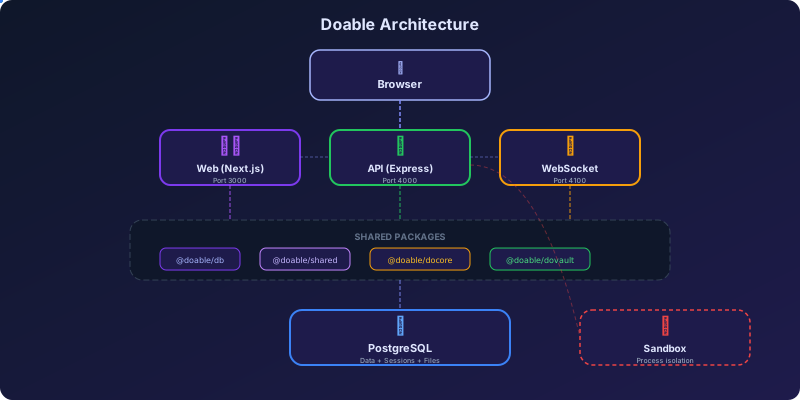
Text-based diagram (for accessibility)
                      ┌────────────────────────────┐
                      │        End user / browser  │
                      └────────────┬───────────────┘
                                   │  HTTPS / WSS
                                   ▼
                          ┌──────────────────┐
                          │ nginx / Caddy    │   TLS termination
                          └─────┬─────┬──────┘
                                │     │ /ws
                /api,/auth      │     ▼
                                │  ┌───────────┐
                                │  │   ws      │  WebSocket service (Yjs CRDT)
                                │  └─────┬─────┘
                                ▼        │
                       ┌─────────────┐   │   internal HTTP
                       │     api     │◀──┘
                       │  (Hono)     │
                       └─────┬───────┘
                             │
       ┌─────────────────────┼─────────────────────────────┐
       ▼                     ▼                             ▼
 ┌───────────┐       ┌──────────────┐             ┌────────────────┐
 │ Postgres  │       │  docore      │             │   web (Next)   │
 │ (pgvector)│       │  AI engine   │             │  Server pages  │
 └───────────┘       └──────┬───────┘             └────────────────┘
                            │ spawns
                            ▼
                   ┌──────────────────┐
                   │ Copilot CLI / …  │  AI provider subprocess
                   └──────────────────┘
                            │ tool calls
                            ▼
                   ┌──────────────────┐
                   │  dovault (jail)  │  cwd + permission sandbox
                   └────────┬─────────┘
                            ▼
                   ┌──────────────────┐
                   │ User project FS  │  PROJECTS_ROOT/<projectId>/
                   │  + Vite dev srv  │
                   └──────────────────┘
The four runtime units
1. apps/web: Next.js 15 frontend
- React 19, Tailwind 4, Monaco editor, Yjs.
- Server Components for the dashboard shell.
- Client Components for the editor, chat, and preview iframe.
- Uses
NEXT_PUBLIC_API_URLandNEXT_PUBLIC_WS_URLto talk to the backend. - Authenticates via JWTs stored in HttpOnly cookies (set by the API).
2. services/api: Hono REST API (Node.js)
- Single Node process, ~80 route files mounted in
src/routes.ts. - Owns: auth, projects, files, AI chat, billing, integrations, GitHub sync, deployments, admin, marketplace, analytics.
- Runs migrations, exposes
/health. - Spawns one Vite dev server per active user project (in a sandboxed child process via
dovault). - Acts as a reverse proxy for the live preview at
/preview/:projectId/*.
3. services/ws: WebSocket server
- Hono +
wswith Yjs for CRDT documents. - One Y.Doc per project; all collaborators connect to it.
- Awareness protocol carries cursors, selections, and presence.
- Talks back to the API via
INTERNAL_SECRET-signed HTTP for auth and persistence.
4. postgres: PostgreSQL 16
- Extensions:
pgcrypto(UUID generation),pgvector(embeddings),pg_trgm(fuzzy search). - Schema lives in
packages/db/migrations/*.sql, applied lexicographically bypnpm db:migrate. - Doable does not use an ORM. Queries live in
packages/db/src/queries/*.tsusing thepostgresdriver.
Shared packages
| Package | Purpose | Used by |
|---|---|---|
@doable/db |
Connection + typed query helpers | api, ws |
@doable/shared |
Constants, types, KV store abstraction (memory/Redis) | All |
@doable/docore |
The AI agent engine. Wraps Copilot SDK, normalizes events, manages tool policies | api |
@doable/dovault |
Runtime jail. Node permissions + OS resource limits | api (when spawning child processes) |
See Monorepo Layout for the complete file tree.
Request lifecycle examples
A user message in the chat
- Browser sends
POST /chat/:projectId/messages(API) with the new prompt. - API authenticates the JWT, loads the project, and starts a streaming response (SSE).
- API delegates to
docore.engine. Docore opens / resumes a session against the configured provider (Copilot CLI, Anthropic, OpenAI). - The provider streams deltas, tool calls, and final messages back through
docore'sEventBus. event-mappernormalizes them; the API forwards normalized events as SSE chunks to the browser.- Tool calls (file edits, shell, fetch) are evaluated against the workspace's policy. Anything filesystem-bound runs inside a
dovaultjail rooted atPROJECTS_ROOT/<projectId>/. - After each file write, the WS service is notified so other collaborators see the new content.
A live preview load
- Browser navigates the preview iframe to
/preview/:projectId/index.html. - API checks if a Vite dev server is already running for that project (
projects/dev-server.ts). If not, it spawns one, sandboxed bydovault, on a free localhost port. - API proxies the request to that internal port.
- The API injects the visual edit bridge script into HTML responses so the parent (Doable editor) can pick clicks and update text in place.
Key design decisions
- Single API process, no microservices. Easier to deploy, debug, and back up. The WS service exists only because long-lived sockets are awkward to share.
- Filesystem as source of truth for project files. AI agents work best on real files; the DB only stores metadata. The
project_filestable is a cache for fast reads from the dashboard. tsx watchin production for API/WS. Acceptable trade-off: instant updates ongit pull, no separate build step. The web app is built normally for SSR perf.-
Bind to
127.0.0.1everywhere; one TLS proxy in front. See Network Binding. -
No Redis required. The
kv-storeabstraction defaults to in-memory; flip on Redis only when you scale beyond one API replica.
Where to read next
- Monorepo layout: directory-by-directory tour.
- Data model: what the database stores.
- Realtime collaboration: how Yjs is wired up.
- Sandboxing: how user-generated code is contained.